
Leak Detection & Pipe Repair
In a building full of neighbours, a leak stops being your private problem very quickly. Finding it fast is worth more here than almost anywhere.
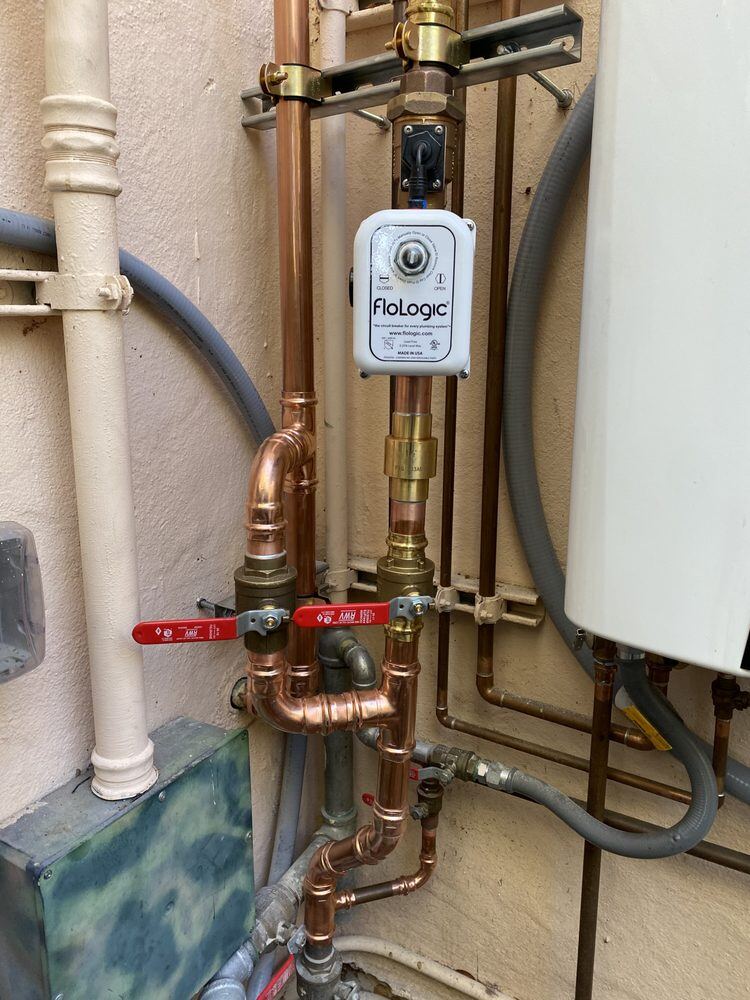
Most leaks we get called to in Manhattan are already someone else's complaint — a stain on a downstairs ceiling, a super knocking on the door, a managing agent asking for a plumber's report. By the time it's visible below, water has usually been moving through a wall or floor assembly for a while.
We start non-invasively. A meter check and a static pressure test tell us whether water is genuinely escaping from a supply line. Acoustic listening and moisture mapping narrow the location before we open anything, because in a pre-war building with plaster walls and tile you want the smallest opening that reaches the pipe, not exploratory demolition.
One honest limitation: not every wet ceiling is a supply leak. Waste line failures, failed shower pans, grouted-out tile, roof and facade water, and condensation on a poorly insulated line all present the same way from below. We test to tell them apart rather than assuming, because the repair — and who's responsible for paying for it — is completely different in each case.
When this is likely your problem
What's included — and what isn't
Included in the quote
- Pressure test and meter check to confirm a supply leak exists
- Acoustic and moisture-based location before any opening
- Access opening at the smallest workable point
- Repair of the located leak where the pipe is accessible
- Post-repair pressure test and a written summary you can give your building
Quoted separately
- Plaster, tile, paint, and finish restoration after access
- Waste and vent line repairs found during investigation, quoted separately
- Work inside a neighbouring unit, which needs their access and consent
- Riser and building-common pipe work, which is usually the building's responsibility
- Mold remediation and water damage restoration, which are separate trades
- Roof, facade, and window leaks — a different trade entirely
What drives the price
We quote after diagnosis, not before. These are the factors that move the number most on this particular service:
- ACCESSWhether the pipe is behind drywall, plaster and lath, tile, or inside a chase.
- HEIGHTWalk-up floors and buildings without service elevator access add labour time.
- SCOPEA single accessible joint versus a section of failed riser branch.
- BUILDINGWhether a certificate of insurance and board approval are needed before work starts.
- TIMINGAfter-hours or weekend work, which some buildings require for noisy jobs.
NYC note
Most co-ops and condos require a certificate of insurance naming the building before a contractor can start, and many restrict noisy work to weekday business hours. We carry a COI and can have it issued to your building — tell us the managing agent's details when you book so it isn't what delays the repair.
Related services
What the visit involves
Confirm there's a leak
Meter reading and a static pressure test separate a real supply leak from condensation or a waste problem.
Narrow the location
Acoustic listening and moisture mapping get us to a specific run before anything opens.
Open the minimum
We access the smallest area that reaches the pipe, and protect the space around it.
Repair, test, document
Fix, re-pressurise, and provide a written summary for your managing agent or insurer.
Questions about leak detection & pipe repair
How do you find a leak without destroying my walls?
We work from least invasive to most. A meter check and pressure test confirm a leak exists at all; acoustic equipment and moisture readings narrow it to a specific run. Only then do we open, and we open the smallest area we can. In plaster and tile that discipline matters, because restoration often costs more than the plumbing repair.
My downstairs neighbour has a stain. Is it definitely my leak?
Not necessarily, and it's worth establishing before anyone starts opening walls. Water travels along joists and can surface well away from its source. It could equally be a riser the building owns, a facade leak, or condensation. We test to identify it rather than assuming, which also matters for who ends up responsible for the cost.
Who pays — me or the building?
That depends on where the failure is and what your building's governing documents say. As a very general pattern, pipes serving only your unit are often the shareholder's or owner's responsibility, while risers and common lines are the building's. We'll tell you what we found and document it, but the responsibility question is between you, your board, and your managing agent.
Can you work if my building requires a COI?
Yes. We carry insurance and can have a certificate issued naming your building and managing agent. Give us those details at booking, because the paperwork is very often the thing that delays a repair rather than the plumbing.
Will you find a leak inside a wall I can't access?
Usually, though sometimes access requires opening from the neighbouring side or from a closet. If the only reasonable access is inside another unit, that needs their permission and the building's involvement, which we'll tell you plainly rather than working around.
Ready to get this looked at?
Call and describe what's happening. You'll get an honest read on urgency and cost before anyone comes out.